The edit that lowers cholesterol
A single IV infusion rewrote one letter of DNA in the liver and dropped LDL cholesterol as much as 62%, sustained for a year.
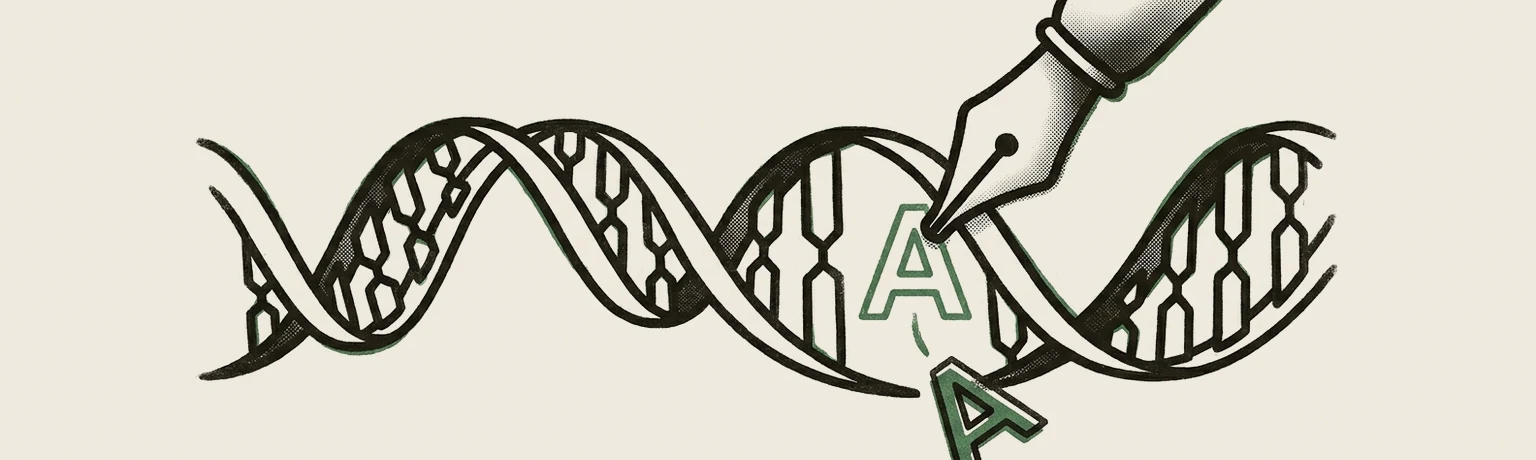
Thirty-five people with inherited high cholesterol got one infusion of a gene editor called VERVE-102. It found a gene called PCSK9 in their liver cells and changed a single letter of the DNA code, switching the gene off for good. At the top dose, the patients' PCSK9 protein fell by 88% and their LDL cholesterol by 62% — an absolute drop of 78 mg/dL — and in the patients followed a full year, it held.
"That's the main concern — you're going to inadvertently edit something that you didn't want to edit." — Daniel Soffer, UPenn cardiologist
The design is an act of mimicry. A small number of people are born with a broken PCSK9 gene; they carry low LDL and low heart-attack risk for life, with no apparent downside. VERVE-102 manufactures that genetic luck in an adult, in one sitting. Today's PCSK9-lowering drugs — the injected antibodies and the twice-yearly RNA shots — work on the same target but have to be taken forever; this is meant to be taken once.
The caution lives in the word 'once.' Durability so far rests on 15 of the 35 patients reaching the one-year mark, and a single permanent edit means a single permanent mistake, if the editor cuts the wrong place — participants are signed up for 15 years of follow-up to watch for it. Every patient also needed steroids and antihistamines before the infusion to blunt reactions, something no existing cholesterol drug requires. The program is the comeback of an earlier version paused in 2023 after a patient's liver enzymes and platelets crashed; the team swapped the gene-editing method and rebuilt the delivery to get here.
The lenses
The facts
How this connects
Tap a node to open it