
Biotech & Synthetic Biology
CRISPR, synthetic biology, cellular agriculture, biofoundries — engineering biology like software.
State of the world · updated June 2026
Right now: gene-editing therapies are clearing regulators and synthetic-biology platforms are pushing the design loop from years toward weeks — the bottleneck has moved from reading biology to reliably writing it.
Start here · the primer
Biology is turning into an engineering discipline. The shift underneath is that DNA is now something you read, write, and compile rather than only observe — sequence a genome for the price of a meal, design an edit on a screen, and print the construct overnight in a biofoundry. Everything in this megatrend follows from that loop closing: rewriting genes to fix disease at the source, building cells that manufacture food, materials, and medicines, and even reconstructing genomes that no longer exist. The question the field actually turns on is control — whether an edit lands only where it should, whether an engineered organism does only what it was designed to, and how fast cheap sequencing plus AI shortens the design-build-test cycle.
Top finds
All finds →The stream, scoped to this megatrend. Your sort, not ours.
Overall = breadth + depth + substance + ½·novelty + freshness (a small boost that halves each week)
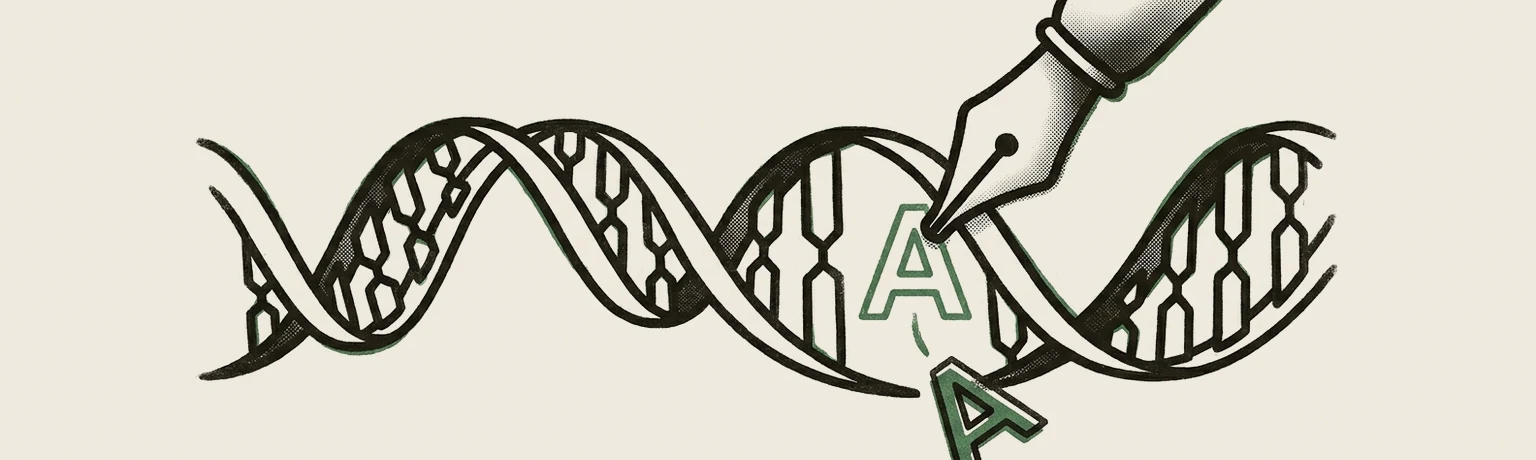
The edit that lowers cholesterol
A single IV infusion rewrote one letter of DNA in the liver and dropped LDL cholesterol as much as 62%, sustained for a year.

CRISPR that makes its own couriers
Doudna's lab programmed the cells a gene editor reaches to build and ship the editor onward to their neighbors, so the edited population ends up larger than the population the injection ever touched.
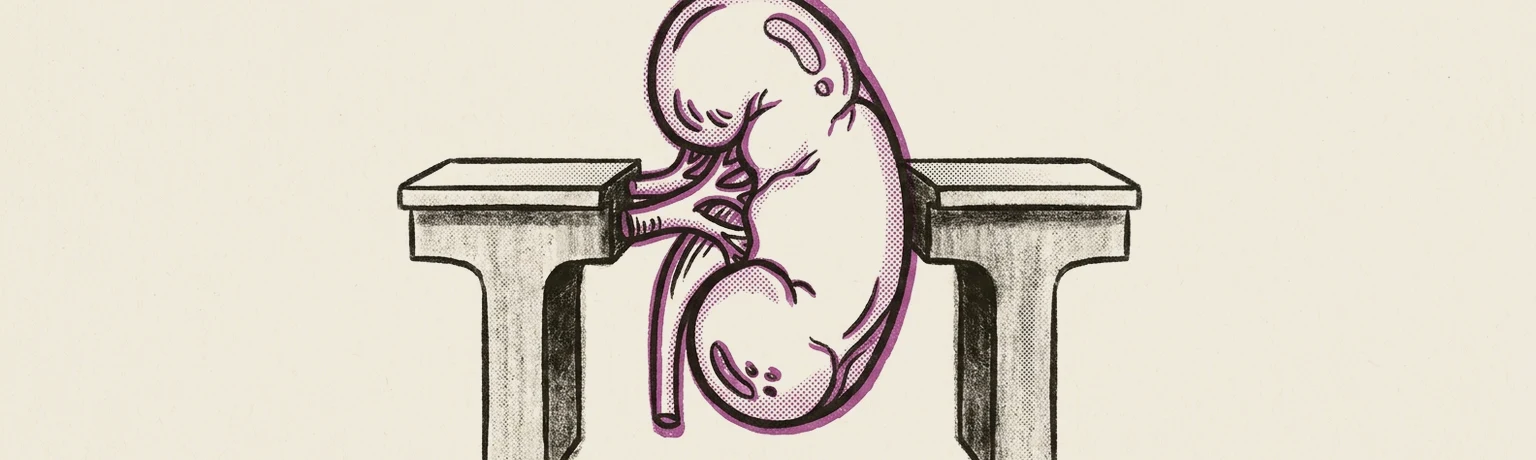
Pig kidneys enter trials
For four years, pig organs went into people one heroic case at a time; in late 2025 the FDA let the field start its first structured trials, enrolling patients in numbered cohorts.

The zombie-cell shortcut
JCVI poisoned a bacterium's DNA with a chemotherapy drug, then slid a synthetic genome from a different species into the dead cell — and some woke up and divided.

The clock turns back in a human eye
For the first time, a therapy meant to make old cells biologically younger — not repair them, but reset them — has been dosed into a living person, starting with the eye.





Concepts
All concepts →The ideas behind this megatrend — explained from the ground up.
AI drug discovery
Using machine learning to find and optimise drug candidates — predicting which molecules will bind a target and survive the body before synthesising them.
Autophagy
The cell's internal recycling system — it wraps damaged proteins and organelles in a membrane sac, then digests them for parts.
CAR-T therapy
A cancer treatment that takes a patient's own T cells, engineers them to recognise a tumour target, and reinfuses them as a living drug.
Protein language model
A transformer trained on amino acid sequences the way a text model trains on words — learning which residues tend to follow which, and what that implies about structure and function.
Synthetic biology
The discipline of engineering living cells and organisms the way engineers design circuits — reading, writing, and rewiring genetic code to produce new functions.
Xenotransplantation
Transplanting organs or tissues from one species into another — today, gene-edited pig organs into humans.
Key entities
Discover all →The companies, people, tools and models doing the work — each scored on its own merits. Turn the dial.
Overall = breadth + depth + substance + ½·novelty
Companies
15Eli Lilly
Indianapolis pharmaceutical company, maker of the tirzepatide drugs Mounjaro and Zepbound and the Alzheimer's antibody Kisunla.
▸ Obesity drugsAlphabet
Google's parent holding company, separating the core internet business from longer-horizon bets like Waymo, DeepMind, Verily, and Isomorphic Labs.
▸ Ai researchJ. Craig Venter Institute
Nonprofit genomics research institute founded by Craig Venter; built the first cell with a fully synthetic genome and the minimal-genome JCVI-syn3.0.
▸ Genomics researchInsilico Medicine
AI drug-discovery biotech whose generative-AI platform both finds disease targets and designs the molecules against them; its lead drug for pulmonary fibrosis is the first where AI picked the target and drew the compound.
▸ Generative molecule designColossal Biosciences
A Dallas biotech using gene-editing and reproductive tech to recreate proxies of extinct animals — woolly mammoth, dire wolf, dodo — and apply the tools to endangered-species conservation.
▸ De extinctioneGenesis
A biotech firm engineering pigs with dozens of CRISPR edits so their kidneys, livers, and hearts can be transplanted into humans.
▸ Organ transplantationUnited Therapeutics
Biotech maker of inhaled and infused prostacyclin drugs for pulmonary arterial hypertension that is now engineering gene-edited pig organs for human transplant.
▸ Pulmonary arterial hypertension drugsEvery Cure
Nonprofit biotech that uses AI to score every approved drug against every known disease, hunting existing medicines that could treat conditions they were never approved for.
▸ Drug repurposingSHINE Technologies
Wisconsin fusion company using accelerator-driven neutron sources to make medical isotopes today, with waste recycling and energy generation as later phases.
▸ Medical isotope productionBiolinq
San Diego maker of an intradermal glucose biosensor — a coin-sized forearm patch whose microsensor array sits shallower in the skin than a needle-based CGM, tracking glucose, activity and sleep for people with type 2 diabetes not on insulin.
▸ Continuous glucose monitoringLife Biosciences
A clinical-stage Boston biotech using partial epigenetic reprogramming (the OCT4/SOX2/KLF4 factors) to reset aged cells toward a younger state, starting with eye disease.
▸ Age related diseaseElement Biosciences
San Diego genomics company that builds DNA sequencers using its own avidity chemistry, competing with Illumina's dominance on cost.
▸ Dna sequencingLila Sciences
A Flagship Pioneering company building AI models paired with autonomous robotic labs that run the scientific method end to end — hypothesis, experiment, result, iteration — across life, chemical, and materials science.
▸ Ai driven scientific discoveryNucleus Genomics
Consumer-genomics startup that sequences a customer's whole genome and returns polygenic risk scores for hundreds of conditions, plus a contested service that ranks IVF embryos on disease risk and traits.
▸ Consumer genome sequencingRetro Biosciences
Longevity biotech targeting the cellular mechanisms of aging — autophagy enhancement, cellular reprogramming, and plasma dilution — to reverse age-related disease.
▸ Longevity biotechPeople
4Demis Hassabis
Co-founder and CEO of Google DeepMind; a chess prodigy and games-industry veteran turned neuroscientist who built the lab behind AlphaGo and AlphaFold, the latter winning him a share of the 2024 Nobel Prize in Chemistry.
Jennifer Doudna
Biochemist who co-showed in 2012 that CRISPR-Cas9 could be programmed to cut DNA at any chosen site, the basis of modern gene editing; shared the 2020 Nobel Prize in Chemistry.
David Fajgenbaum
Physician-scientist who repurposed an existing drug to treat his own near-fatal Castleman disease, then co-founded Every Cure to find new uses for approved medicines with AI.
▸ Drug repurposing researchGeoffrey von Maltzahn
Biological engineer and serial company-builder; a Flagship Pioneering general partner now running Lila Sciences, his bid to automate the scientific method with AI-driven labs.
▸ Ai for scienceModels
1Products
1How this connects
Tap a node to open it