The zombie-cell shortcut
JCVI poisoned a bacterium's DNA with a chemotherapy drug, then slid a synthetic genome from a different species into the dead cell — and some woke up and divided.
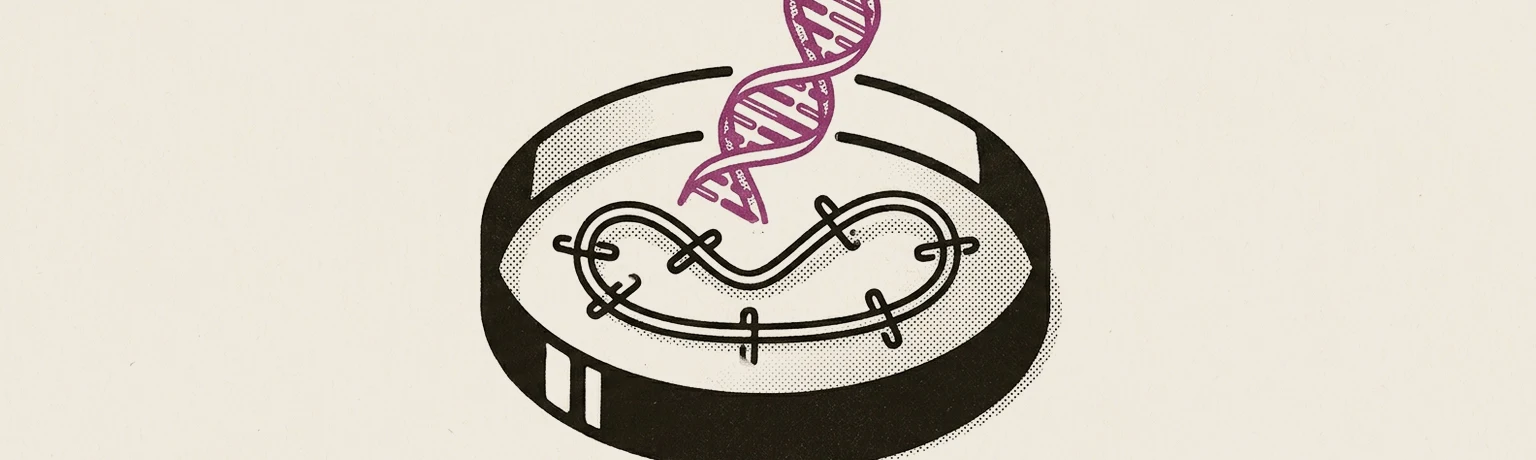
A culture of Mycoplasma capricolum gets a two-hour dose of Mitomycin C, the same drug used to crosslink DNA in cancer patients. The cells' own genome is now chemically welded shut — metabolically the cells are still ticking over, membrane and ribosomes intact, but they can never reproduce again. Into these living-dead husks the team installs a synthetic chromosome built from a different species, Mycoplasma mycoides. A fraction boot up on the new instructions, grow, and pass the synthetic genome to their offspring.
"The extension of this beyond the mycoides taxon faces additional hurdles, and additional species-specific barriers may yet emerge." — the authors, on why the method stays niche for now
The point isn't the gothic framing — the team's nod to Haitian zombie folklore — it's a fix for a stubborn bottleneck. Transplanting a whole genome into a bacterium has been possible since JCVI did it in 2007, but the foreign genome had to out-compete the recipient's still-living DNA, a leaky contest riddled with false positives and dependent on antibiotic-resistance markers to score the winners. Killing the home genome first removes the contest entirely: no competition, no markers needed. Yield jumped roughly 500,000-fold, to about one revived cell per 288 dead ones.
Strip away selection markers and whole-genome transplantation gets simpler and cleaner, which is what synthetic-biology labs would need to routinely drop engineered genomes into bacteria for making drugs or chemicals. JCVI bills the result as the first living cell assembled from non-living parts — a claim that, as with its 2010 synthetic cell, depends heavily on where you draw the line, since the donor sequence copies a natural genome and the host's cellular machinery was never dead. The harder limit is biological: mycoplasmas have no cell wall and feeble DNA-chewing enzymes, so they tolerate this. Most bacteria would shred the incoming genome on arrival.
The lenses
The facts
Concepts
How this connects
Tap a node to open it