Gene therapy
Treating disease by delivering working genetic instructions into a patient's cells — correcting, silencing, or replacing a defective gene.
Learn first
Most genetic disease comes down to a wrong instruction — a mutation that produces a broken protein or none at all. Gene therapy's premise is direct: get a correct copy of that instruction into the affected cells. The delivery problem is the hard part. Viruses (chiefly AAV) are the main courier — they evolved to inject their own DNA into cells, and researchers repurpose that machinery for therapeutic cargo. The body's immune system can reject the courier, cargo capacity is limited, and hitting the right tissue reliably remains unsolved for most targets. Editing tools like CRISPR change the resident sequence rather than adding a new copy, which raises a different set of problems around precision and off-target cuts.
Where it came from
In megatrends
Related players
Finds citing this concept
Overall = breadth + depth + substance + ½·novelty + freshness (a small boost that halves each week)
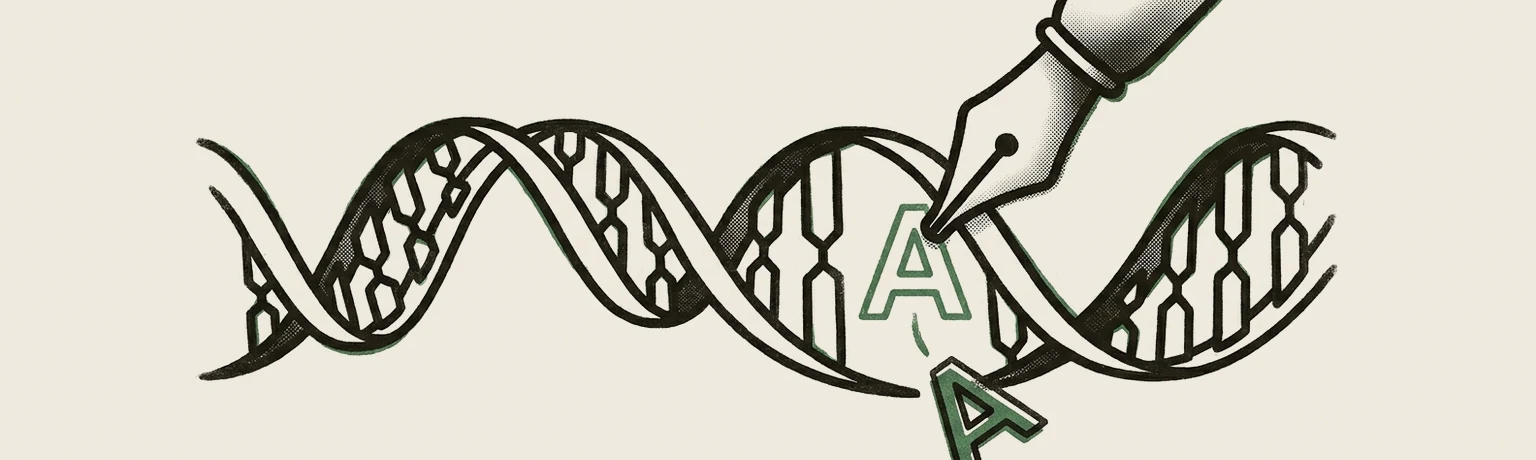
The edit that lowers cholesterol
A single IV infusion rewrote one letter of DNA in the liver and dropped LDL cholesterol as much as 62%, sustained for a year.

CRISPR that makes its own couriers
Doudna's lab programmed the cells a gene editor reaches to build and ship the editor onward to their neighbors, so the edited population ends up larger than the population the injection ever touched.

Pig kidneys enter trials
For four years, pig organs went into people one heroic case at a time; in late 2025 the FDA let the field start its first structured trials, enrolling patients in numbered cohorts.

The clock turns back in a human eye
For the first time, a therapy meant to make old cells biologically younger — not repair them, but reset them — has been dosed into a living person, starting with the eye.
How this connects
Tap a node to open it