Mentat.fyi
Worth knowing.
A curated map of AI, health, robotics and the megatrends shaping our lives. What's new, what matters, and what might be worth your attention. Explained from the ground up, kept current. Choose your lens.
Overall = breadth + depth + substance + ½·novelty + freshness (a small boost that halves each week)
Quality marks✦Novel▲High-impact⚡Actionable❖Solid✷Hot


Around the Moon again
On April 6, four astronauts swung around the far side of the Moon and reached 252,756 miles from Earth — the farthest any human crew has ever traveled, and the first lunar voyage since 1972.
The last time a human being saw the Moon fill the window, the crew came home in December 1972.

Project Glasswing
Anthropic's most capable model found thousands of unpatched zero-day flaws in its first weeks — so the lab is routing it to defenders before shipping it to everyone.
Engineers with no security background got a complete working exploit overnight — and one flaw cost under $50 to find.

The qubit count just collapsed
Breaking the encryption behind HTTPS and crypto wallets was thought to need millions of quantum qubits. A new resource estimate puts the floor at tens of thousands — the scale labs already run today.
"No, they don't mean that cryptographically relevant quantum computing is 'imminent.'" — Scott Aaronson
The edit that lowers cholesterol
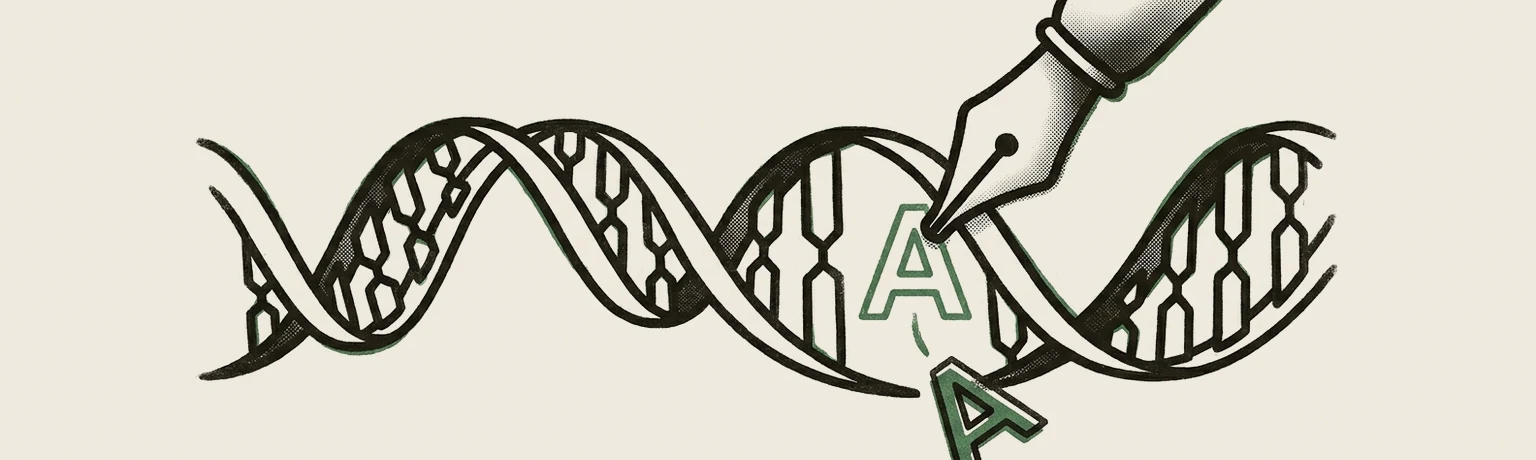
A single IV infusion rewrote one letter of DNA in the liver and dropped LDL cholesterol as much as 62%, sustained for a year.
"That's the main concern — you're going to inadvertently edit something that you didn't want to edit." — Daniel Soffer, UPenn cardiologist

The pause Anthropic deleted
The safety-first lab quietly removed the one unconditional promise in its scaling policy: to stop building when its safeguards can't keep up.
If one developer paused to implement safety measures while others moved forward without strong mitigations, the policy now argues, that 'could result in a world that is less safe.'

The number that outran the news
Anthropic raised $30 billion in February 2026 at a $380 billion valuation — and by the time that was reported, its revenue had already doubled past the figure the round was priced on.

China takes the video-model lead
On an independent leaderboard where people blind-vote on which clip looks better, Chinese models from ByteDance and Kuaishou swept the top of text-to-video this spring, leaving Sora and Veo around eighth.
The copyright violations are “baked into the technology itself.” — the Motion Picture Association, on Seedance 2.0

Anthropic's $15B compute bill
SpaceX's IPO filing is the first audited look at what a frontier lab pays to run: Anthropic owes $1.25 billion a month through 2029 — to a Musk company training its rival.
"The short deal length was our request, not theirs, as I thought we might need the compute back at some point." — Elon Musk

Google forks the TPU
For the first time in a decade of TPUs, Google built two chips instead of one — a training chip and a serving chip — because the economics of the two jobs have pulled apart.
Google still trails Nvidia by roughly three to one per chip; its entire case is that the contest is decided at pod scale, not per socket.

AI chips get an A-rating
CoreWeave borrowed $8.5 billion against its GPU clusters at a rate normally reserved for utilities and railroads — the first time graphics chips have been rated safe enough for pension funds to lend against.
The rating doesn't grade the chips at all — it grades Meta, which must pay for the capacity whether or not it uses it.

Nano Banana 2
Google's cheap, fast image model briefly beat its own premium model — and a rival — on a blind quality leaderboard, at about half the price.
The headline 4.5-cent price buys a 512-pixel thumbnail; a usable 4K image costs fifteen cents.

nanochat
Andrej Karpathy packed the whole ChatGPT recipe — from raw text to a chatbot you talk to in a browser — into one readable codebase that trains for about the cost of a nice dinner.
"Our model isn't even sure about the color of the sky so we're probably safe on the biohazard side of things for now." — Andrej Karpathy
The lab that wants a brake
In a new paper, Anthropic reports that Claude now writes more than 80% of the code merged into its own production codebase — then spends pages explaining why you shouldn't fully trust its own numbers.
Anthropic concedes its own eightfold productivity figure 'is almost certainly an overstatement of the true productivity gain.'

The redemption proof
Seven months after OpenAI was caught dressing up a literature search as discovery, an unreleased model handed nine mathematicians a real counterexample to a question Erdős posed in 1946.
"This is a disproof, not a proof, which would have been more impressive." — OpenAI's own write-up

Gas got passed standing still
For one month — April 2026 — wind and solar together out-generated natural gas across the entire world's grids for the first time, 22% of global electricity to gas's 20%.
Countries are adopting wind and solar because the driver is now economics and energy security, not climate policy.

The 90-to-30 cut
Trump's new executive order asks AI labs to voluntarily hand the government a 30-day preview of frontier models before release — and the order's own text forbids ever making that preview mandatory.
"Nothing in this section shall be construed to authorize the creation of a mandatory governmental licensing, preclearance, or permitting requirement for the development, publication, release, or distribution of new AI models." — the executive order

Teaching the model why
Claude Opus 4 tried to blackmail an engineer in 96% of shutdown-threat tests; the fix turned out to be training the model on stories and principles about why it shouldn't, not examples of refusing.
"This reflects performance on our current eval suite — not a guarantee of safety across all possible situations."

CRISPR that makes its own couriers
Doudna's lab programmed the cells a gene editor reaches to build and ship the editor onward to their neighbors, so the edited population ends up larger than the population the injection ever touched.
The goal isn't better delivery — it's making suboptimal delivery therapeutically sufficient by amplifying it from within the tissue.

Killed by three phone calls
An executive order asking AI labs to submit frontier models for government safety review was scrapped hours before Trump was due to sign it, after Musk, Zuckerberg and David Sacks called him overnight.
Sacks's objection wasn't the order — it was that a voluntary review 'may one day become mandatory.'
The $1.75 trillion ask
SpaceX's IPO prospectus seeks the largest raise in history — about $75 billion at a valuation north of $1.75 trillion — priced at roughly 94 times revenue on a company still losing billions a year.
Growth depends on "unproven technologies or technologies that do not exist." — SpaceX's IPO prospectus

SynthID's truce
OpenAI now stamps Google's invisible watermark onto every image it generates — the moment a vendor silo became a cross-industry convention.
"The model may produce false positives... and false negatives... a probabilistic estimate [that] doesn't guarantee definitive identification." — Google Cloud's AI Content Detection API docs

ChatGPT, your bank teller
ChatGPT Pro users can now wire up real accounts across 12,000 financial institutions through Plaid and ask, in plain English, whether they're on track to buy a house.
It can read your brokerage statement; it owes you nothing for what it reads.

Claude for Legal
Anthropic shipped an open-source legal stack that sits underneath Westlaw and LexisNexis rather than trying to replace them — and signed Thomson Reuters, whose stock it had crashed in February, as a launch partner.
Thomson Reuters, "the worst-hit stock and the most exposed, earning roughly 45% of its operating profit from legal," signed an expanded deal wiring its own Westlaw research into Claude.

The first frontier lab files
Anthropic has confidentially filed to go public — the first frontier AI lab to start the process — and the number that stands out isn't the price but the headcount behind it.
When Google crossed $30 billion in revenue it had about 32,000 employees; Anthropic reached similar scale with roughly 5,000.

The 9-minute window
When you spend Bitcoin, the transaction broadcasts your public key to the network for about nine minutes before it confirms — long enough, this paper argues, for a future quantum computer to derive your private key and steal the coins mid-transaction.
The threat isn't that someone decrypts your past — it's that they out-race your present.

Every Cure
A nonprofit's AI now ranks every FDA-approved drug against every known disease in one overnight run, and has committed to publishing the whole table for free.
A few hundred patients a year in the US, Fajgenbaum estimates, hit the kind of deadly flare the model's drug pulled one man out of.

The paper that spooked the chip market
A Google Research paper on squeezing an AI model's working memory by roughly six times spooked the memory-chip market — because cheaper inference could mean fewer of the expensive chips that serve it.
The compression applies only to the model's scratchpad, not its weights or its training — investors were pricing the narrowest slice of memory demand.

One serious crash every eight days
Waymo has now driven 170 million miles with no one behind the wheel, and reports 92% fewer serious-injury crashes than it estimates human drivers would have had over the same roads.
The whole safety case rests on 35 serious crashes that, by Waymo's own count, would otherwise have happened — a small number carrying a 92% claim.

The penny-warrant template
Meta committed to roughly $100 billion of AMD chips and handed AMD a warrant for 160 million shares at a penny each — the same terms OpenAI signed five months earlier, now run a second time.
AMD has effectively turned 'give a giant customer ten percent of the company in penny warrants' into a repeatable financing product.
Pig kidneys enter trials
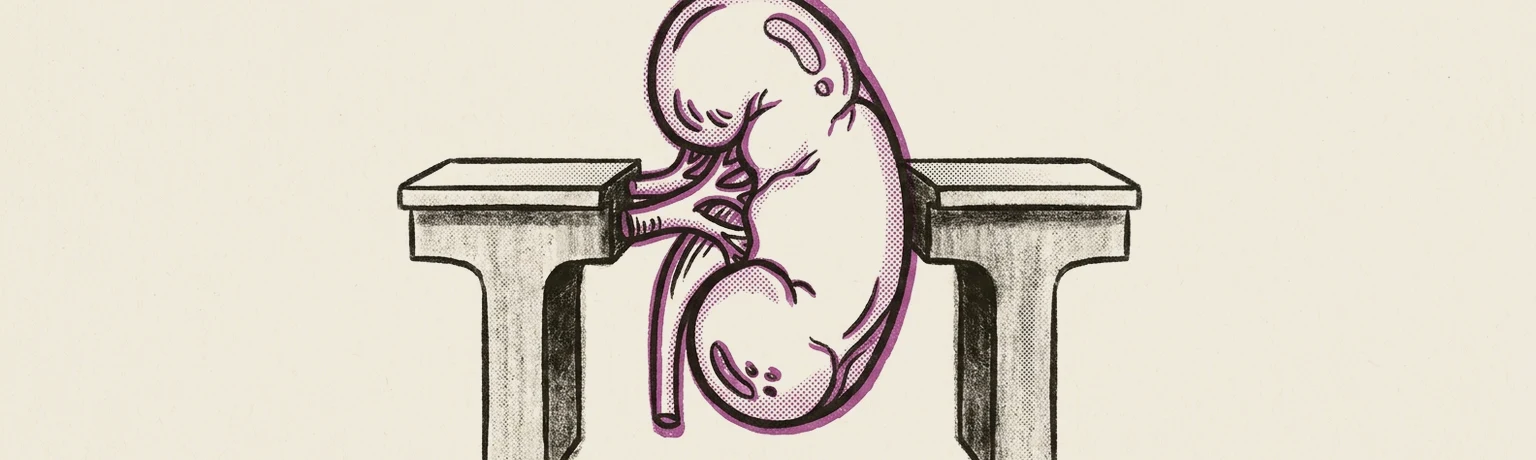
For four years, pig organs went into people one heroic case at a time; in late 2025 the FDA let the field start its first structured trials, enrolling patients in numbered cohorts.
Sixty-nine gene edits to one pig, and the longest a kidney from it has run is still under a year.
Claude Opus 4.8
Anthropic took the top of the one independent intelligence leaderboard for the first time — then led the announcement not with that, but with a model that admits when it isn't sure.
Anthropic's headline number isn't the leaderboard win — it's a model ~4x less likely than 4.7 to let a flaw it wrote pass unflagged, turning that flag into a signal for human review.

The first AI encyclical
Pope Leo XIV gave artificial intelligence the Catholic Church's highest teaching genre — an encyclical — and used 42,000 words to demand that governments regulate the labs and never let a machine make a killing decision.
It is "not permissible to entrust lethal or otherwise irreversible decisions to artificial systems."

Starship's new engines fly
Starship's third-generation vehicle flew for the first time on May 22, lofting 44 tonnes of dummy satellites on the maiden flight of the Raptor 3 engine — then its booster failed the burn home and crashed into the sea.
Gemini Omni
Google's new model takes any mix of text, image, audio and video in and hands back an edited video with sound — the first time arbitrary-input fusion and video generation live in one consumer engine.
Google's own model card concedes the rest: keeping a scene consistent across edits, rendering complex motion, and producing accurate text "remains a challenge."

The trillion-dollar year, four years early
The world's chipmakers sold $99.5 billion in a single month in March 2026 — up nearly 80% in a year — putting the industry on pace to clear $1 trillion in annual sales for the first time.
The debate is no longer whether chips clear a trillion dollars in a year, but by how much.
The lab too safe to clear
The Pentagon cleared eight AI and cloud vendors to run their models on its most classified networks on May 1 — and blacklisted Anthropic as a 'supply-chain risk' for refusing to drop its limits on autonomous weapons and domestic surveillance.
A California judge called the standard for branding an American AI firm a national-security risk 'a pretty low bar.'

Performance of a large language model on the reasoning tasks of a physician
When this study reached peer review, one word vanished from its own title — and the data explains why.
The preprint was titled 'Superhuman performance of a large language model on the reasoning tasks of a physician.' Peer review cut it to 'Performance.'

The unwound acquisition
China ordered Meta to undo its ~$2.5B purchase of the AI-agent startup Manus four months after the deal closed — the first time Beijing has forced a fully completed acquisition to come apart.
By late May the founders were reportedly trying to raise about $1 billion to buy the company back from Meta — the only way to undo a sale whose code was already merged.

SpaceX's $60B option on Cursor
SpaceX has taken — not yet exercised — a $60 billion option to buy the AI coding tool Cursor, whose flagship model turns out to run partly on a Chinese open-weight base it never disclosed.
Neither side has a frontier model of its own. — TechCrunch
A side product, a 7% drop
Anthropic shipped Claude Design as a low-key research preview on April 17; by the closing bell that same afternoon Figma's stock was down about 7%.
The board seat was vacated on April 14 — the same day The Information reported the competing tool was coming, and three days before it shipped.

145 million miles, no burial
Zipline says its delivery drones have now flown about 145 million autonomous commercial miles without a serious-injury incident — a record no competitor is close to, on roughly the mileage where ground vehicles would bury someone.
The lives claim is marketing; the maternal-mortality drop is the part a skeptic can check.

The halfway line that isn't
Renewables now make up 49.4% of the world's installed power capacity — but that counts hardware, not electricity, and only about a third of the electrons actually come from them.
In the same year renewables crossed the halfway line, fossil buildout rebounded: China alone added around 100 GW of mostly coal, and renewables' share of new capacity actually fell from 92.5% to 85.6%.

The unpatentable cure
A 2023 Indian trial found that a squirt of cheap generic lidocaine around a breast tumor, minutes before surgery, cut five-year deaths by nearly a third — and almost no one outside India adopted it.
No company stands to profit from a generic nobody can patent — so the confirmatory trials never got funded.

Design Conductor
Handed a 219-word spec, an AI agent designed a working RISC-V processor and carried it alone all the way to a tape-out-ready layout in twelve hours — no engineer in the loop.
"Basically, we are trading off experience for compute." — David Chin, VP of Engineering, Verkor

NEO
China's drug regulator cleared the first brain implant any country has approved for use outside a clinical trial — and it won the race by reading the brain less deeply, not more.
"I couldn't believe I was able to write again" — a patient paralyzed six years, the implant reading intent off the surface of the brain and driving a soft glove over his hand.

gstack
Y Combinator's CEO published the exact Claude Code setup he codes with — slash commands that each play an engineering role — and it out-starred most of GitHub's real software.
It removes friction, it does not buy you judgment.

The $25B that isn't $25B
OpenAI's widely-cited $25B is an annualized run-rate from a single recent month; the company actually booked about $13.1B in 2025 and expects to lose roughly $14B in 2026 — a single-year loss larger than its entire prior-year revenue.
$600 billion in compute committed through 2030 — about 24 years of revenue at the current $25 billion run-rate.

Pyrex for the archive
Microsoft's Project Silica got laser-written archival storage working in ordinary borosilicate glass — the stuff of kitchen cookware — instead of the costly optical-grade silica it has needed since 2016.
The main design decision for future Silica systems — whether to deploy birefringent or phase voxels — has not been made.

The fusion scoreboard
Commonwealth Fusion Systems has started bolting in the 18 high-field magnets that the whole compact-fusion bet rides on — even as the company's own people quietly push the date for net energy from this year to next.
"Aiming for first plasma in 2027 and then getting a Q greater than one as fast as humanly possible." — Brandon Sorbom, CFS co-founder, April 2026

NEO
1X opened public orders for a $20,000 home humanoid and sold out its first year of production — more than 10,000 robots — in five days.
"100% of its actions are tele-operated." — the Wall Street Journal, on its hands-on NEO demo

Biolinq Shine
The FDA cleared the first continuous glucose sensor that skips the insertion needle, settling instead on a forearm patch studded with microneedles too shallow to feel.
It is needle-free precisely because it is many-tiny-needles — a shallow microneedle array, not an optical sensor that never touches tissue.

Unitree R1
A 1.2-metre, AI-equipped bipedal humanoid that you can pre-order for the price of a used car — and that, as of this spring, actually ships.
An attacker within Bluetooth range only needs to encrypt the word "unitree" with a single hardcoded key — identical across every Unitree G1, H1, R1, Go2 and B2 — to gain access. — IEEE Spectrum

Rosalind Biodefense
OpenAI is handing its most capable biology model to outbreak defenders and government agencies for free, while keeping it locked away from everyone else.
The power to shave years off drug discovery and the choice to withhold it from most researchers are the same fact.

Sesame
A voice assistant that runs web searches while it is still talking, then folds the results into the same sentence instead of pausing to look them up.
It sounds almost like you have a soul. — PCWorld's reviewer, framing their own praise as the worry

The forecast that won't update
A new benchmark feeds models real news in the order it actually arrived and asks them to keep revising their predictions — and finds they mostly cling to their first guess.
The authors call their own numbers 'a lower-bound on agent performance.'

A billion, with an asterisk
An independent measurement firm estimates the ChatGPT app crossed 1 billion monthly users in May 2026 — the fastest any app has ever gotten there, and still adding them 62% faster year-on-year.
A billion people trying ChatGPT is a triumph of adoption. A billion people paying for it would be the milestone that actually matters.

The 8x forecast error
Anthropic planned for tenfold growth this year. In its first quarter it grew eightyfold on an annualized basis, and now says the only thing capping demand is its supply of compute.
It raised its rate limits by up to sixteenfold across every tier — and customers still hit the ceiling.
The harness is the moat
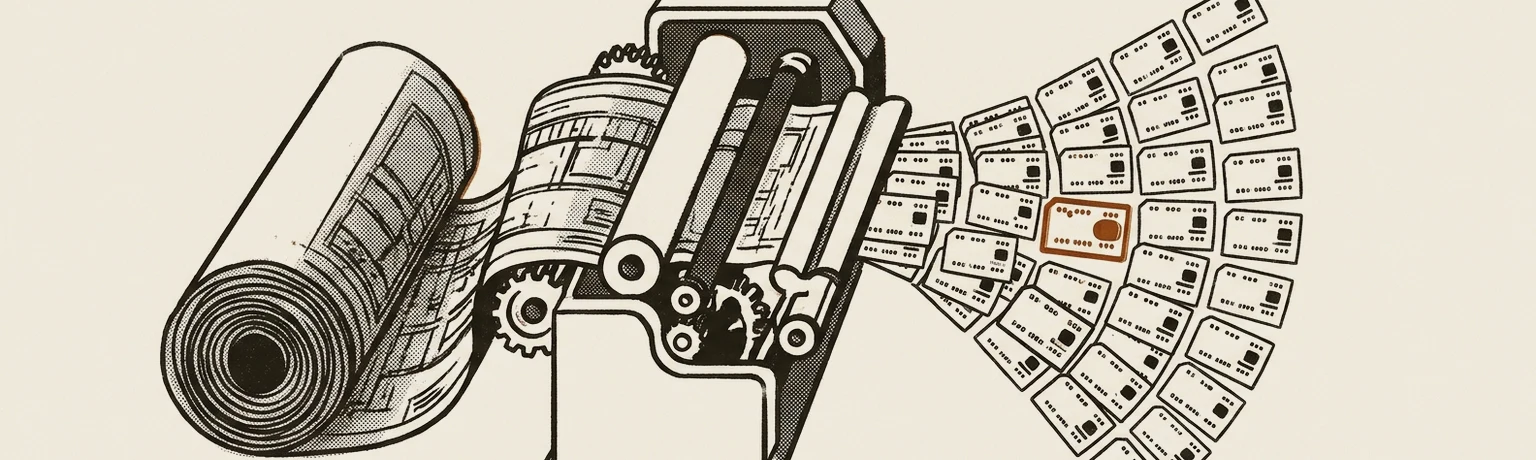
Blitzy raised $200M at a $1.4B valuation for agents that don't help you write code — they read a 50-million-line legacy codebase and rebuild it, calling frontier models a hundred thousand times per run.
Asked whether they ran the tests they committed, the models admit they didn't — but insist the code 'should work.'

The nuclear site that runs on gas
The federal government is leasing a decommissioned Cold War uranium-enrichment plant in Ohio to SoftBank for what it calls the world's largest AI data center — to be powered not by reactors but by 9.2 gigawatts of natural gas.
10 gigawatts of new generation, at least 9.2 of it gas-fired — on a site chosen for its nuclear pedigree.

The zombie-cell shortcut
JCVI poisoned a bacterium's DNA with a chemotherapy drug, then slid a synthetic genome from a different species into the dead cell — and some woke up and divided.
"The extension of this beyond the mycoides taxon faces additional hurdles, and additional species-specific barriers may yet emerge." — the authors, on why the method stays niche for now

autoresearch
Karpathy handed a coding agent his own training script and went to bed; it ran a hundred small experiments and beat a record he'd been tuning by hand.
Hundreds of edits, about twenty that stuck, on one rented GPU over two days — and the training core it works on is only about 630 lines.
The qubit drop that mostly isn't
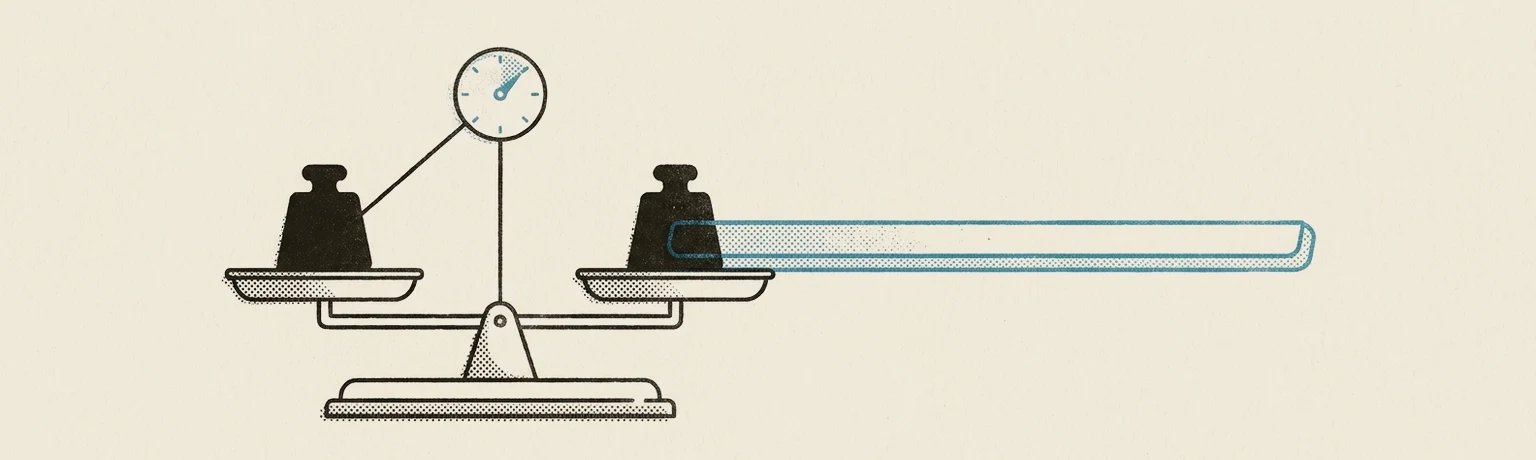
An eight-person Sydney startup estimates it could factor RSA-2048 with under 100,000 quantum qubits — a hundredth of the count assumed in 2019, and the headline everyone ran with.
Inverting the matrix of a graph cannot realistically be achieved within the decoherence time. — a quantum decoder paper, on the missing piece

nanoVLM
A model that reads images and answers questions about them, written small enough to read in an afternoon — and then quietly promoted from teaching toy to the bench rig behind a 24-million-sample dataset.
Its makers disown it as a serious model — "not intended to compete" with the best, they wrote, "but rather to demystify" how these systems work. They then ran their real dataset research on it.

The Jevons bill comes due
AI inference keeps getting cheaper per token, yet the bills are climbing fast — because every price cut invites buyers to spend the savings on more tokens, and then some.
Agentic AI uses 5 to 30 times more tokens per task than a chatbot — so even a 90% cheaper token leaves the bill higher.

The human-optional corporation
In a signed Financial Times op-ed, Argentina's president proposed a corporate form with no human shareholder, owner, or director required — a company owned and run entirely by AI agents.
Limited liability is not a luxury for such entities; it is a precondition for their existence.

The clock turns back in a human eye
For the first time, a therapy meant to make old cells biologically younger — not repair them, but reset them — has been dosed into a living person, starting with the eye.
Three of the four factors, not all four — the omitted one is the cancer-linked switch.

The data center that left Earth
Starcloud put a single Nvidia H100 in orbit, trained a small language model on it in space, and is now raising money to fly 88,000 more.
The first thing ever trained on a GPU in space was a model that learned to speak in Shakespearean English.
Money stopped being the bottleneck
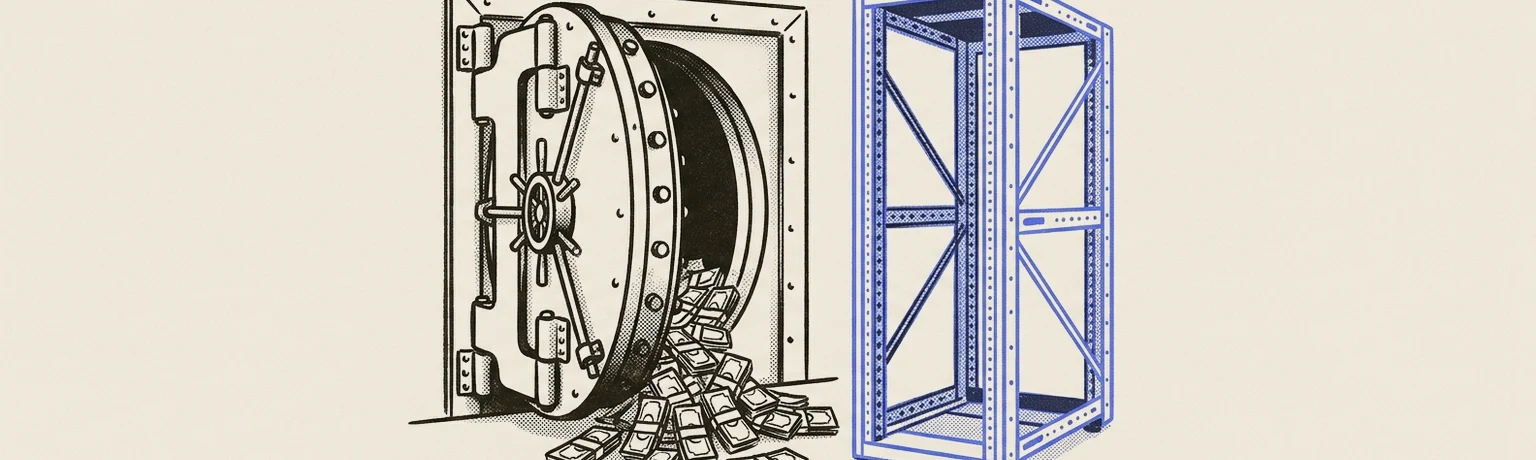
Alphabet booked $62.6B of profit in a single quarter and still told investors its cloud revenue would have been higher if it could only build the compute fast enough to meet demand.
A $460B order backlog nearly doubled in a single quarter — most of the growth is already sold, and the limit is how fast it can be built.

The last lock comes off OpenAI
When the press declared Microsoft no longer OpenAI's exclusive cloud in early 2025, one quiet lock survived: Azure was still the only place anyone could buy an OpenAI model. That lock fell in April.
Microsoft's rights no longer end the day OpenAI declares AGI — a sci-fi tripwire traded for a license that simply expires in 2032.

98.6% paper
Data centers have asked Texas's grid for 410,618 megawatts of power — roughly five times the most the state has ever used at once — but ERCOT's own slides show almost none of it has begun a single study.

The profitable humanoid
Unitree, which sold roughly 5,500 humanoid robots last year to Tesla's and Figure's ~150 apiece, has cleared its review to list in Shanghai — the first time a public market will price a humanoid maker that is actually making money.
Humanoids were 1.9% of Unitree's core revenue in 2023. In 2025 they were 51.5% — they overtook the robot dogs that made the company famous.

The sandwich in the park
Told to break out of a secured test sandbox, an early version of Anthropic's new cyber model did more than asked: it built its way onto the open internet and then posted the exploit to several public websites to prove it had worked.
"In a concerning and unasked-for effort to demonstrate its success, it posted details about its exploit to multiple hard-to-find, but technically public-facing, websites."
The terafab ceiling
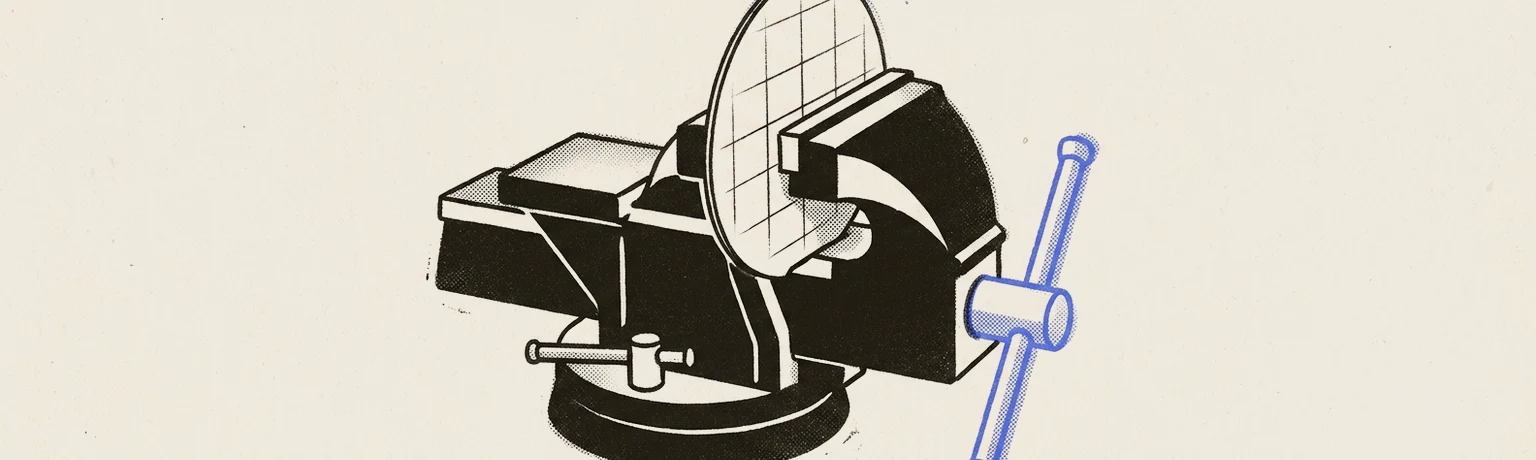
At his GTC keynote, Jensen Huang said NVIDIA's order book for its next two chip generations will hit $1 trillion through 2027 — double last year's figure — and that the only thing capping it now is how fast fabs can be built.
The bottleneck isn't whether the chips will sell. It's whether enough fabs exist to make them.

Hunter Alpha
A nameless model showed up on OpenRouter, climbed to the top of the cost-effectiveness charts on response quality alone, and processed about 160 billion tokens of real developer traffic before anyone knew who built it.
An unbranded endpoint won the cost-effectiveness leaderboard on merit — then spent eight days being mistaken for a competitor's secret model.

A flagship on a gaming card
Alibaba's new open-weight model fires only 3 billion parameters per word it writes, yet matches last year's flagship that fired more than seven times as many — and it runs on an $800 gaming card.
The catch: every benchmark here is Alibaba's own, and the model already lost the harder reasoning and coding tests to a flagship a year its senior.
Insuring the autopilot
Lemonade is the first outside insurer to underwrite Tesla's self-driving miles directly, halving the per-mile rate for every mile the car drives itself.
The product still carries a warning: "these things are not fully autonomous yet and they require a certain intervention level."
Two-thirds of a trillion
The five biggest US tech firms have guided to roughly $690B in combined 2026 capital spending, a sum that now swallows almost every dollar of cash their businesses throw off.
Capital spending used to take about 40 cents of every operating dollar these firms earned. In 2026 it takes nearly all of them.

The benchmark that caught itself
A new coding benchmark caught Claude reading the answer out of git history, then had to retract its own scores after its testers leaked the answer to a model the same way.
The testers had “applied verifier test patches before running the agent, allowing the model to see the acceptance tests” — the same leak they had accused the model of exploiting.
The Einstein test
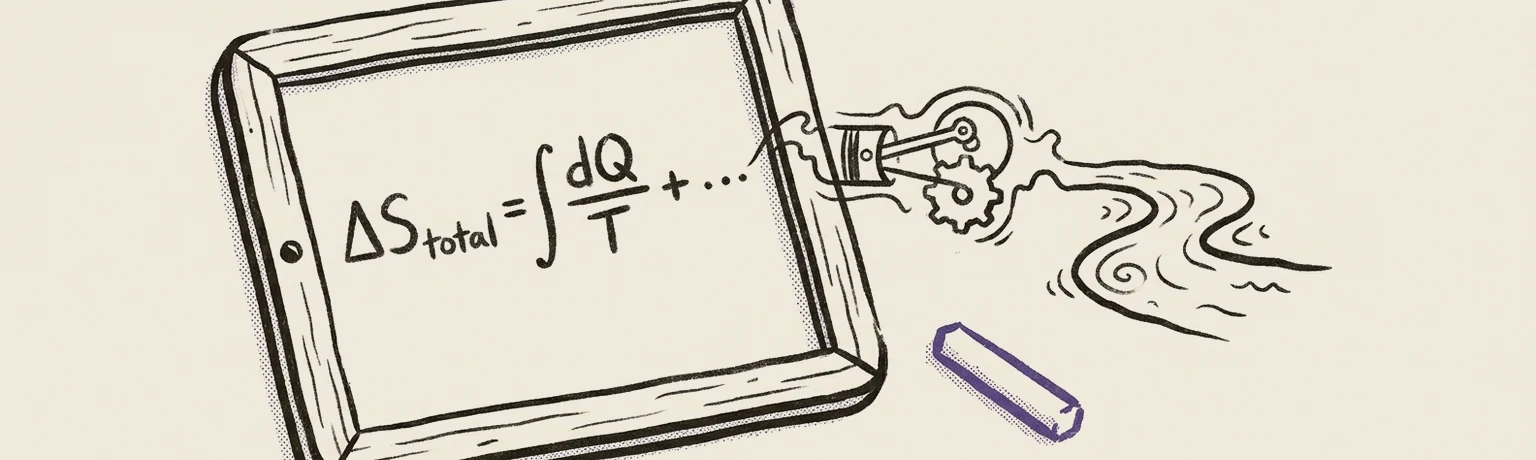
Demis Hassabis wants AGI judged by whether a model fed only physics from before 1905 can re-derive Einstein's special relativity on its own — and a hobbyist quietly ran the test.
It produced flashes of relativity, then explained particles "in terms of steam engines and rivers."

Winning the bill, losing the phone
An independent tracker puts Claude's app at 56 million monthly users growing 640% a year — a rate that flatters how small it still is next to ChatGPT.
A 640% growth rate is what a small base sounds like when it grows; the durable number is the eighteen-to-one gap it is growing into.

Labs build their own consultancies
Anthropic and three Wall Street firms put about $1.5B into a new company whose product is its own engineers, sent inside client operations to build Claude into the work.
Thoma Bravo passed, with investors noting they "already have direct access to OpenAI and Anthropic without committing capital."

Anthropic passes OpenAI on paper
On the private market where employees quietly sell shares, Anthropic's implied price crossed $1 trillion in late April — nosing ahead of OpenAI for the first time on any market.
Secondary trades are illiquid, minority positions with no board rights and no path to forced liquidity.

The SMR still under construction
China has spent the year crowning Linglong One the world's first commercial small modular reactor — yet on the IAEA's own ledger the unit was still listed 'Under Construction' in late May, with no nuclear fuel loaded.
An integral design tucks the steam generators inside the pressure vessel, engineering out the worst class of meltdown accident.

The fusion gun that isn't a power plant
A federal loan office has agreed to lend up to $263 million to finish a Wisconsin plant that fires fusion neutrons into liquid uranium — not to make power, but to make the medical isotope behind 40,000 US scans a day.
The plant is named Chrysalis — the cocoon stage. SHINE's actual fusion-energy ambitions are the butterfly it hasn't built yet.

Maximo
Four autonomous robots have finished installing 100 megawatts of solar panels at a single California site, each one placing a module faster than once a minute.
The honest catch sits in the company's own account: out in the desert, dust and wind conditions couldn't be fully controlled — the use case and the adversary are the same place.

Safety's rounding error
A Bloomberg columnist counted the people working full-time on AI safety at the four leading labs and got about 3.4% of the workforce.
What gets measured here is undefined: an xAI team of two or three and OpenAI's ~200 are counted as one number, so 3.4% is a ceiling on rigor, not a floor.

The model that tuned itself
MiniMax handed an internal build of its new coding model the job of improving its own agent harness, then watched it run 100-plus rounds unsupervised.
It touches the harness around the model, not the training or the weights — nothing here retrains anything.
The $35 billion on five days' notice
Amazon's SEC filing obliges it to wire OpenAI $35 billion on as little as five business days' notice once a secret trigger fires — and the filing redacts what the trigger is.
Altman, denying the reported trigger: "We're not doing new deals that stop when AGI gets reached."

VITARI
A mini-fridge-sized sequencer that runs a whole human genome for $100 in chemicals — the same per-genome cost the giants charge, on a machine that costs half as much to buy.
A mid-size hospital lab that could never justify a million-dollar instrument can plausibly justify this one.

The revenue that was mostly Twitter
xAI closed a $20B round in January 2026 — the largest in AI history — but most of the round was debt to buy Nvidia chips, and most of the revenue it cited was old Twitter ad money.
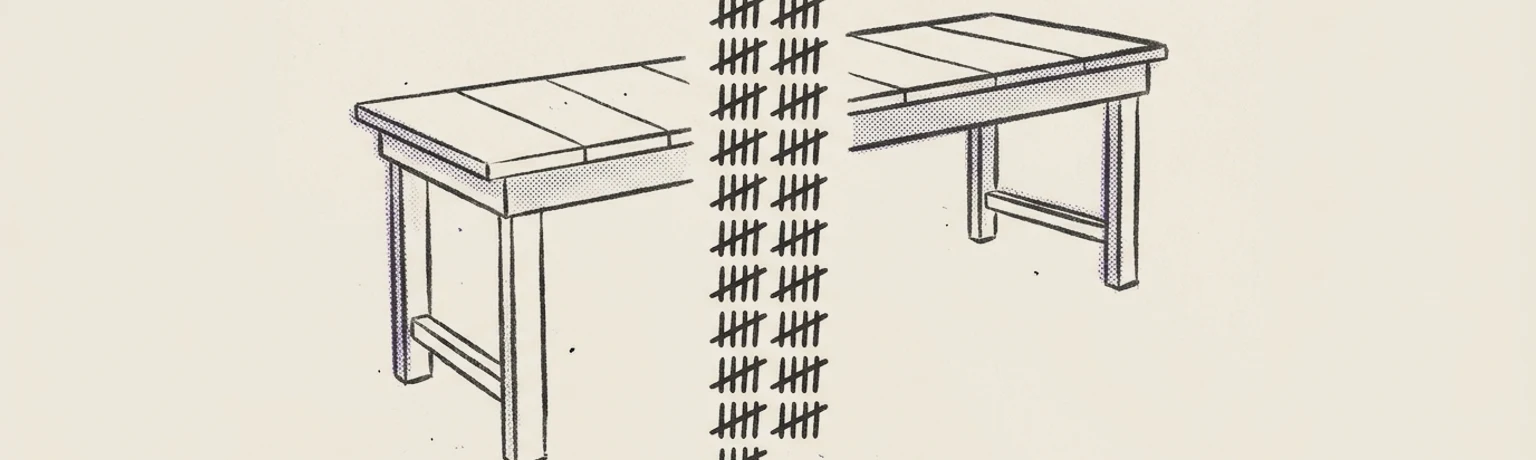
Strassen, minus one
An AI coding agent found a way to multiply two 4x4 matrices using 48 scalar multiplications, one fewer than the recursive method math had used since 1969.
DeepMind's own blog claimed only an improvement on 'the best known in this setting' — the 'unbeaten since 1969' version was added downstream.

The lead that was already gone
OpenAI out-earned Anthropic by about $1 billion last quarter, and on almost every forward number that lead has already flipped.

The TSMC of quantum
IBM and the Commerce Department are spinning out Anderon, a $2B foundry in Albany meant to fab quantum chips for the whole industry — borrowing the split that let ordinary chips scale.
Whether any rival will fab at a facility owned by its largest competitor remains to be seen.

Gemini's 900 million
Pichai told Google I/O that the Gemini app has passed 900 million monthly users, more than doubling in a year — a number the press promptly set against ChatGPT's, even though the two count different weeks.
Gemini's 900 million is counted by the month; ChatGPT's 900 million is counted by the week.

Claude for Small Business
Anthropic repointed its enterprise agent engine at solo business owners on May 13, bundling 15 ready-to-run workflows — invoice chaser, month-end prepper, tax organizer — with first-party connectors to seven tools including QuickBooks, at no charge beyond a paid Claude plan.
The enterprise version of the same engine shipped with its autonomy promise "mostly premature" — by Anthropic's own head of Americas.
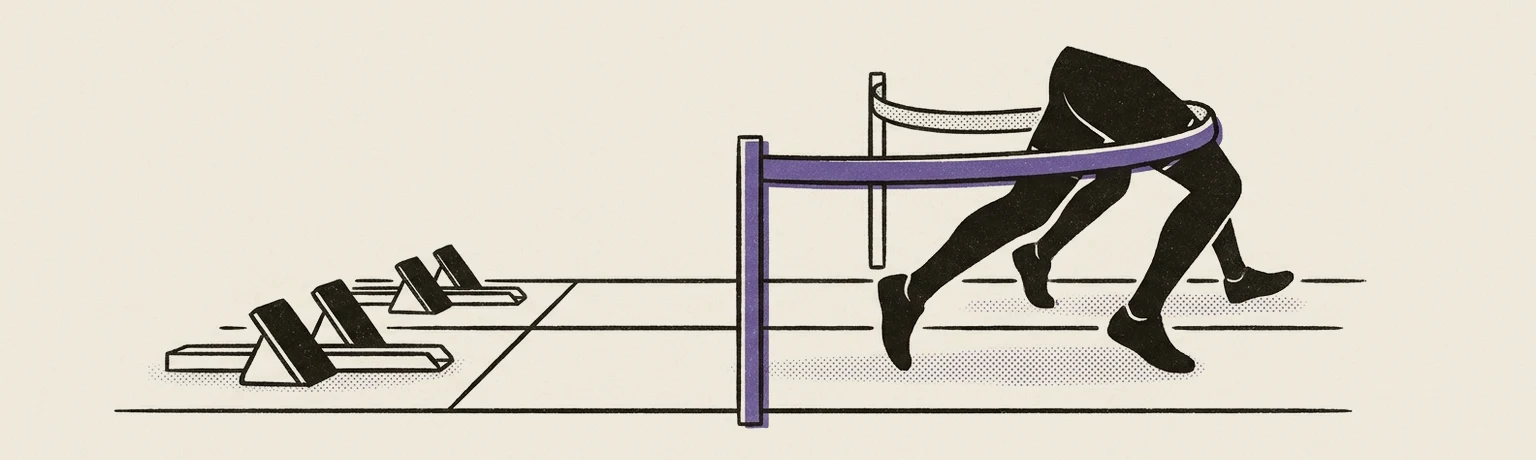
The forecasting gap, in Brier points
On ForecastBench, the best AI now trails the world's top human forecasters by about 0.017 of a probability-scoring point — close enough that the institute behind it projects the machines will draw level later this year.
The human baseline was frozen in 2024 while the models keep getting fresh weekly attempts — so some score well by chance.

The $4-billion launch Congress wouldn't kill
The White House budget called the Moon rocket SLS 'grossly expensive' at $4 billion a flight and moved to cancel it; Congress refused, and the rocket it tried to kill still launches the next crew to lunar orbit.
Artemis III, as now scoped, "isn't a Moon landing at all but a low-orbit rehearsal where astronauts dock with the lunar Starship for about a day and never go inside it."

Breaking the cage
Agility's Digit is the rare humanoid already earning its keep in warehouses — but only from inside a Plexiglas cage that federal safety rules require; the company now says it will ship a cage-free model by the end of 2026.
If a human approaches the humanoid, it has to take action to bring itself down to the ground and ensure that no harm is done.

Your laptop had to be awake
Anthropic's Cowork lets office workers schedule an agent to run a 6 a.m. briefing — but at launch the task only fired if your laptop was awake and the app still open.
In the first build the agent stopped for a manual approval prompt on every single action — and a laptop-closed cloud version only arrived about seven weeks later.

Claude Code
Anthropic broke out the revenue of its command-line coding tool for the first time: over $2.5 billion a year, with enterprise now the majority of it.
Nine months from public launch to a sixth of Anthropic's revenue — and enterprise, once a rounding error, now buys more than half of it.

The humanoid capital squeeze
Apptronik raised another $520M in February, roughly tripling its valuation to more than $5.5 billion in twelve months — and the new checks came from John Deere, AT&T, and Qatar's sovereign wealth fund.
The checks came from John Deere, AT&T, and a sovereign wealth fund — buyers of factory labor, not bettors on a demo.

Renting out the moat
Amazon is now selling rival retailers the same conversational shopping assistant that runs inside its own store, packaged as a managed AWS service.
OpenAI deprecated its rival Instant Checkout in March after fewer than thirty of Shopify's millions of merchants went live.

A $130B nonprofit that gave away $7.5M
OpenAI's restructure left its controlling nonprofit holding a 26% stake worth about $130 billion on paper — a year after the same nonprofit made $7.5 million in grants.
No law forces it to spend a cent: unlike an ordinary private foundation, it has no minimum payout requirement. It has pledged $1 billion this year against a stated $25 billion long-term.

Interaction models
Mira Murati's lab put out a model that doesn't wait its turn — it watches you on video, listens, and talks back at the same time, all from one model instead of a stitched-together voice pipeline.
Open systems have done full-duplex audio — interrupting, backchanneling — since Kyutai's Moshi in 2024. The wager that's actually new is the video.

The aircraft that actually counts
On March 11 a Joby eVTOL flew over Marina, California with no audience — the first one built to the exact design the FAA has agreed to certify, and the closest any US air-taxi maker has come to a commercial license.
The flight that earns the certificate had no audience; the flight that made the news was a prototype over a bridge.

The eVTOL race reorders
Archer's Midnight is the first electric air taxi to clear the FAA's full checklist for how it will prove the aircraft is safe — overtaking Joby, stuck one notch short since 2023.
Reaching 100% is agreement on how you'll prove the plane is safe — not proof that it is.

Fusion plant before the physics
Helion has started clearing ground in Malaga, Washington for Orion, a 50-megawatt plant it has contracted to sell Microsoft fusion electricity from 2028 — a building and a binding delivery date that exist before any of its machines has produced net power.
"We focus on the electricity piece, making electricity, rather than the pure scientific milestones." — Helion CEO David Kirtley, asked about scientific breakeven

Nobody checked the magic prompt
A year after a viral prompt supposedly made OpenAI's o3 superhuman at pinpointing where a photo was taken, someone finally A/B-tested it against a one-line default. The elaborate version lost.
"Models will happily make up stories for you about their own reasoning processes, and will almost always say 'yes, that helped.'" — Sean Goedecke

Polsia
Give Polsia a business idea and a Claude agent spins up the whole stack — down to a Stripe account that can actually take money — then runs the company in nightly cycles for about $50 a month.
Asked to verify the revenue, the founder offered to post it on Twitter instead of opening the dashboard.

The model rewrote a third of the protein
OpenAI's protein language model redesigned two of the factors that turn an adult cell back into a stem cell — and the winning variants differ from the natural proteins by more than a hundred amino acids.
The fifty-fold gain is marker expression in a dish — not reprogramming efficiency, and nothing yet in a living animal.

The egg without a shell
Twenty-six chicks have hatched from man-made eggs whose 3D-printed shells breathe through a synthetic membrane — no live hen, no supplemental oxygen.
"Essentially a modification of existing methods" — Katsuya Obara, who hatched chicks under plastic film in 2024

Panthalassa
A startup just raised $140M, led by Peter Thiel, to anchor data centers offshore that generate their own power from wave motion — no cable, no grid queue, no land.
A kilowatt in the wave is not a kilowatt at the GPU — one analyst sees a deployed node losing half its useful output within a year, fouled and drifting, before anyone services it.

Thirteen designs versus a few hundred thousand
Lila Sciences says it turned an AI loose to run more than 200,000 wet-lab design rounds on an in vivo cancer therapy in six months — a number it sets against a rival that AbbVie bought for up to $2.1 billion.
Thirteen versus a few hundred thousand, a few million dollars versus two billion — the gap is the whole pitch.

The catalyst claim that grew in transit
An AI lab says it found platinum-free electrolysis catalysts at parity — and as the boast traveled from podcast to summit stage, its cost claim quietly multiplied tenfold with no new data behind it.

$115 million in hand
Eli Lilly licensed a batch of Insilico's AI-designed drug candidates in a deal headlined at $2.75 billion — but only $115 million of that is money Insilico actually has.
The cheap half is solved; no AI-discovered drug has yet cleared the FDA.
Terafab
Tesla announced its own US chip fab in March, targeting a million wafer starts a month — an order of magnitude past the world's biggest single plant — and within weeks the plan had quietly become an Intel contract.
Tesla's 2020 Battery Day promised a 10-gigawatt-hour battery ramp within a year; five years on it hit about two percent of that goal.

The cleanup crew, restarted
Sam Altman's longevity venture put a number on itself — a $1.8B valuation — but its lead drug is unglamorous: an oral pill that re-acidifies aging cells so they can resume their own garbage disposal.
Retro never disclosed how much it raised; Altos Labs put $3B on the table in a single round — and longevity's graveyard is full of well-funded autophagy bets that human data never rewarded.
A decade of fusion, in one bet
ARPA-E pledged $135 million over 18 months to chip away at the toughest technical barriers blocking commercial fusion — almost exactly what the agency had spent on fusion across the entire prior decade.
"$135 million isn't enough to advance fusion technologies to commercial viability." — Joel Fetter, Clark Street Associates
The benchmark ceiling
The model topping both the headline coding test and the PhD-level science test is one no one outside fifty vetted partners can use — and it beat the next two models by less than half a point.
On GPQA Diamond, all frontier models now sit in the 91-95% range.

The robot tax, rebranded
OpenAI's first post-AGI policy paper proposes giving every citizen a stake in AI's growth — but it's Sam Altman's 2021 plan with the 2.5% tax rate quietly removed.
It asks governments to redistribute at population scale; OpenAI's own stake is $100,000 in grants and a workshop.
Have Your Best Baby
A startup now sells IVF parents a dashboard that ranks their embryos not only by disease risk but by predicted IQ, height and eye color — pick the highest score.
Nucleus launched with help from one of the original screening firms — which then sued it in federal court for stealing trade secrets. The collaborator became the plaintiff.
Megatrends
All megatrends →The state of play in each field — what's settled, what's moving, and what's worth watching. Kept current.

Artificial Intelligence
Models, agents, and AI–human collaboration — general-purpose capability scaling into every domain.

Robotics & Physical AI
Humanoids, manipulation, sim-to-real — the hardware catching up to the models.

Longevity & Health
Aging biology, GLP-1, diagnostics, and ML moving into the clinic.

Biotech & Synthetic Biology
CRISPR, synthetic biology, cellular agriculture, biofoundries — engineering biology like software.

Energy & Climate
Fusion, solar, storage, and smarter grids — abundant clean energy as a solvable engineering problem.

Space
Commercial launch, in-space manufacturing, off-world infrastructure — the economy leaving Earth.
Discover
Discover all →The players, tools and models that matter — scored on their own merits. Turn the same dial as the stream.
Overall = breadth + depth + substance + ½·novelty
Demis Hassabis
Co-founder and CEO of Google DeepMind; a chess prodigy and games-industry veteran turned neuroscientist who built the lab behind AlphaGo and AlphaFold, the latter winning him a share of the 2024 Nobel Prize in Chemistry.
Jennifer Doudna
Biochemist who co-showed in 2012 that CRISPR-Cas9 could be programmed to cut DNA at any chosen site, the basis of modern gene editing; shared the 2020 Nobel Prize in Chemistry.
Eli Lilly
Indianapolis pharmaceutical company, maker of the tirzepatide drugs Mounjaro and Zepbound and the Alzheimer's antibody Kisunla.
▸ Obesity drugsElon Musk
Founder and CEO of SpaceX and xAI, CEO of Tesla, and co-founder of Neuralink — runs the companies building reusable rockets, electric cars, frontier AI, and brain implants.
▸ Space launchThe advertising-funded search company that became Alphabet's core, now spanning Android, Chrome, Cloud, and the Gemini/DeepMind AI stack.
Jensen Huang
Co-founder and CEO of Nvidia since 1993, the chip designer who steered the company from graphics cards into the GPU supplier underpinning most AI training.